
Know your food.
Not the marketing.
A plain-language field guide to protein: what it does, how much you need, how to read a label without being sold to, and which foods are genuinely worth the space in your fridge.
Protein, without the biochemistry degree.
Four ideas cover ninety percent of what you'll ever need to decide what to eat.
What protein actually is
A macronutrient built from 20 amino acids. Nine of them are essential — your body can't make them, so food has to deliver them.
Why it earns its place
It protects muscle in a calorie deficit, keeps you full longer than carbs or fat, and costs energy just to digest.
How much you need
1.6–2.2 g per kg body weight covers almost everyone. Higher in a deficit, lower if you're sedentary and maintaining.
What's safe
For healthy adults, intakes up to 3 g/kg show no kidney harm in controlled research. Timing matters far less than the daily total.
Ten foods, side by side.
Tap a food to see how much protein it carries per 100 g — and how many calories you pay for it.
Chicken breast
The reference point. Lean, cheap, endlessly versatile.
- Protein
- 31 g
- per 100 g
- Energy
- 165
- kcal / 100 g
- Density
- 0.19
- g per kcal
How to read density
Above 0.10 g per kcal the food is genuinely lean protein. Between 0.05 and 0.10 it's a balanced staple. Below 0.05 you're mostly buying fat or carbs.
Five seconds to see through a package.
The front of the box is an advertisement. The back is the only part that has to tell the truth.

Animal and plant, honestly compared.
Not a moral question — a practical one. Both work. They simply ask for different amounts of attention.

Animal protein
- Complete amino acid profile
- High leucine, high absorption
- Rich in B12, iron and zinc
- Saturated fat in fattier cuts
- No fibre
- Higher environmental footprint
Plant protein
- Fibre and micronutrients included
- Low in saturated fat
- Cheaper and more sustainable
- Often limited in one amino acid
- Slightly lower absorption
- Needs variety across the day
Four claims that refuse to die.
Tap a claim to see what the research actually says.
The trolley and the fridge.
Knowledge only counts at the shelf. These are the defaults that make a good week automatic.
Twenty grams, no cooking.
- Skyr with berries20 g
- Two boiled eggs13 g
- Cottage cheese & cucumber18 g
- Tuna on rice cakes24 g
- Edamame (150 g)17 g
- Turkey slices & cheese21 g
- Roasted chickpeas12 g
- Low-sugar protein bar20 g
Four rules that beat any diet app.
- 01Buy the plain version. Flavoured yogurt, quark and drinks add sugar you can add yourself, cheaper.
- 02Frozen chicken, fish and berries are the same food at a lower price with a longer life.
- 03Anchor the trolley on ten staples: eggs, skyr, cottage cheese, chicken, canned tuna, tofu, lentils, oats, rice, frozen vegetables.
- 04One rule at the shelf: more protein than sugar per 100 g, or it goes back.
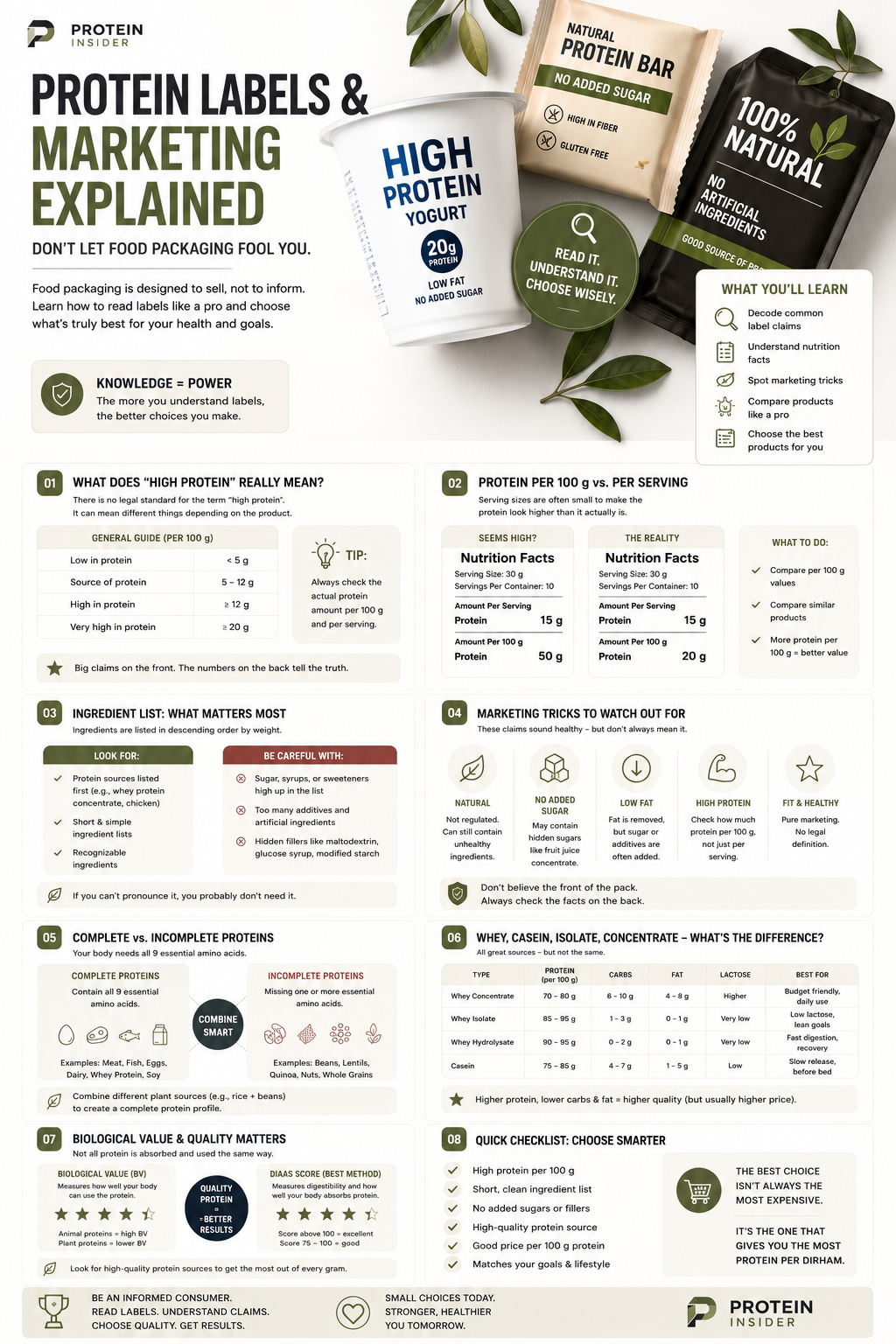
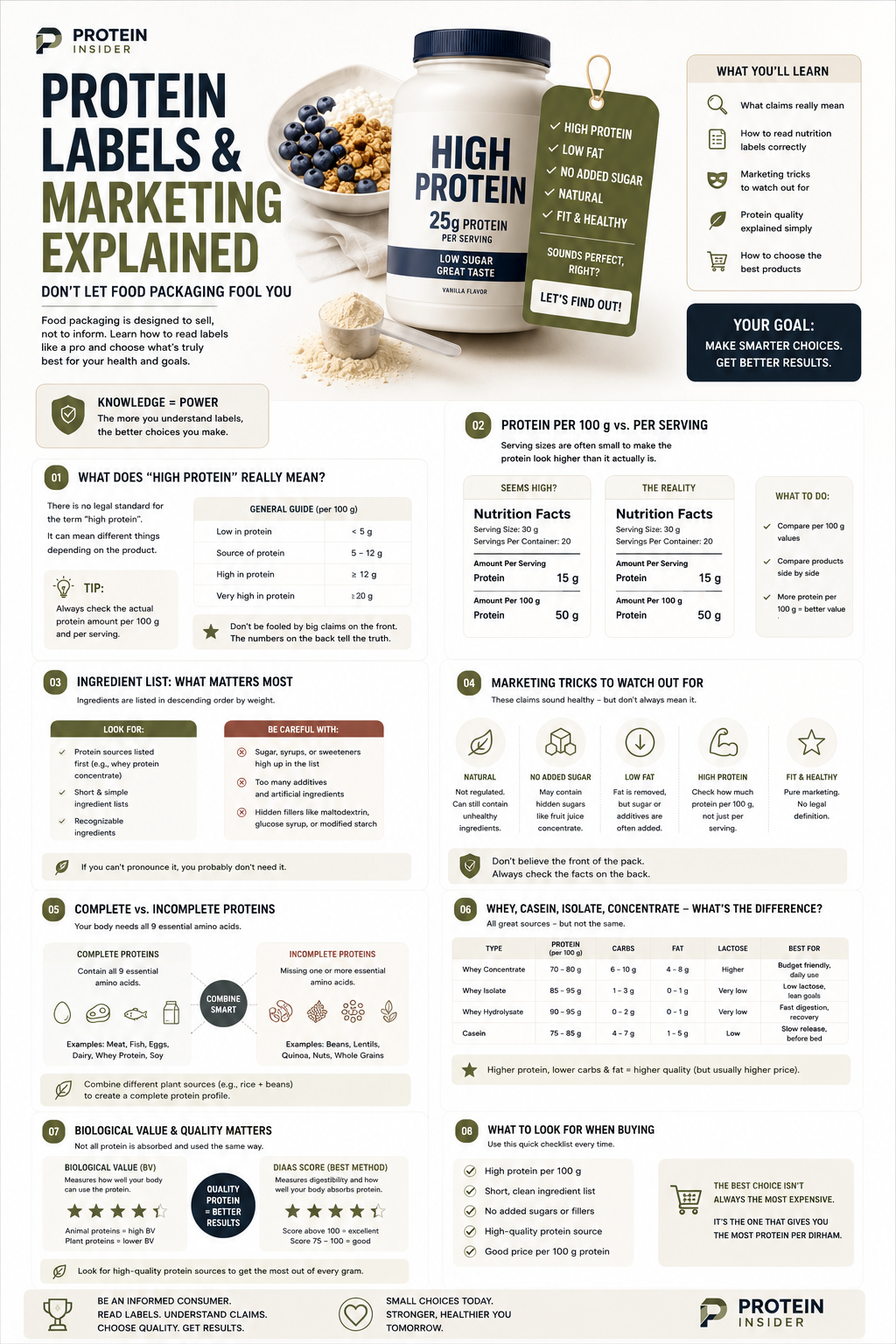
Before you leave...
Understanding protein goes far beyond simply eating more of it. These two free guides help you decode misleading food labels and make smarter nutrition decisions every time you shop.
- Protein Labels & Marketing Explained — Guide 1
- Protein Labels & Marketing Explained — Guide 2
No sign-up required. Instant PDF download.
Recommended articles
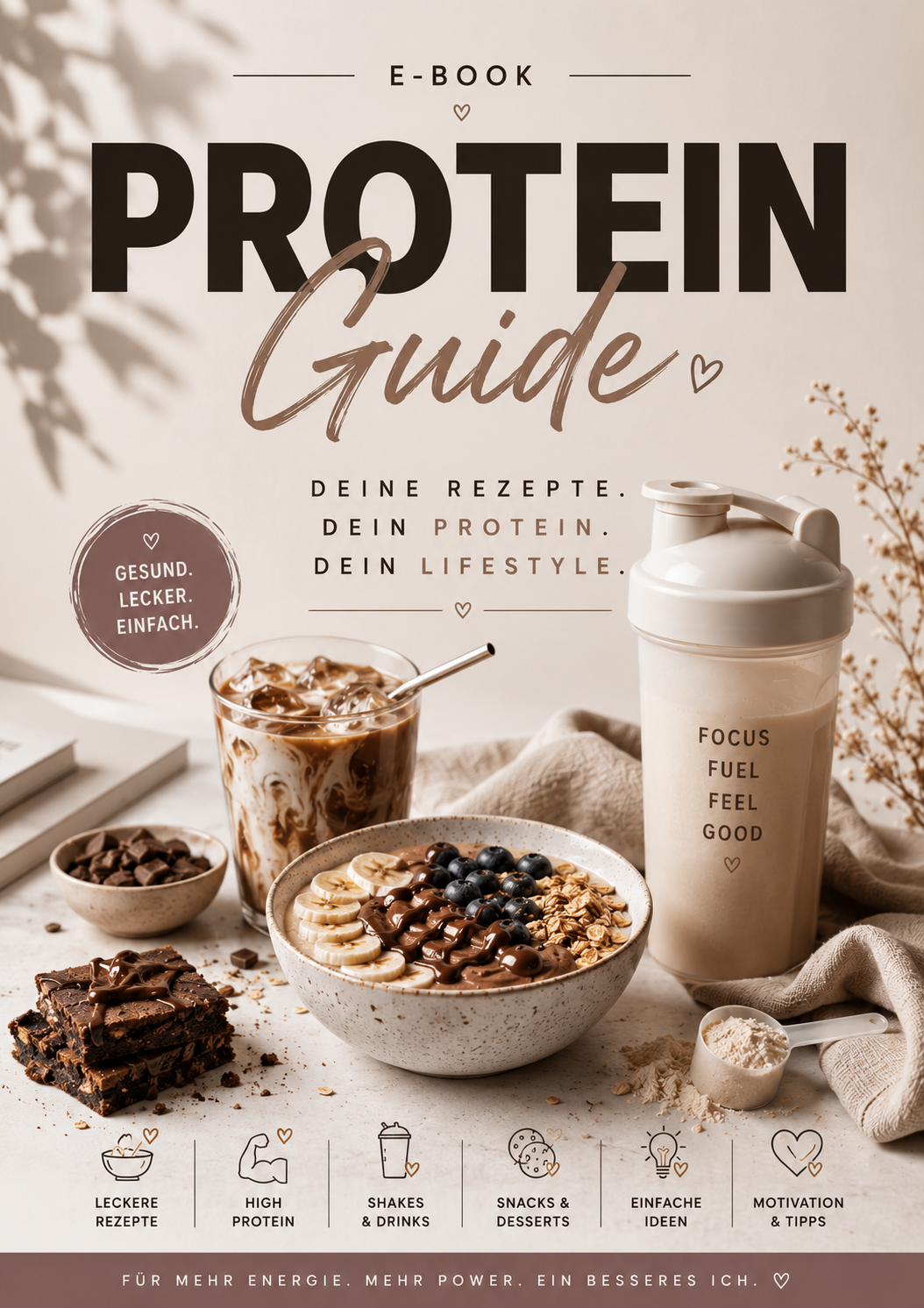
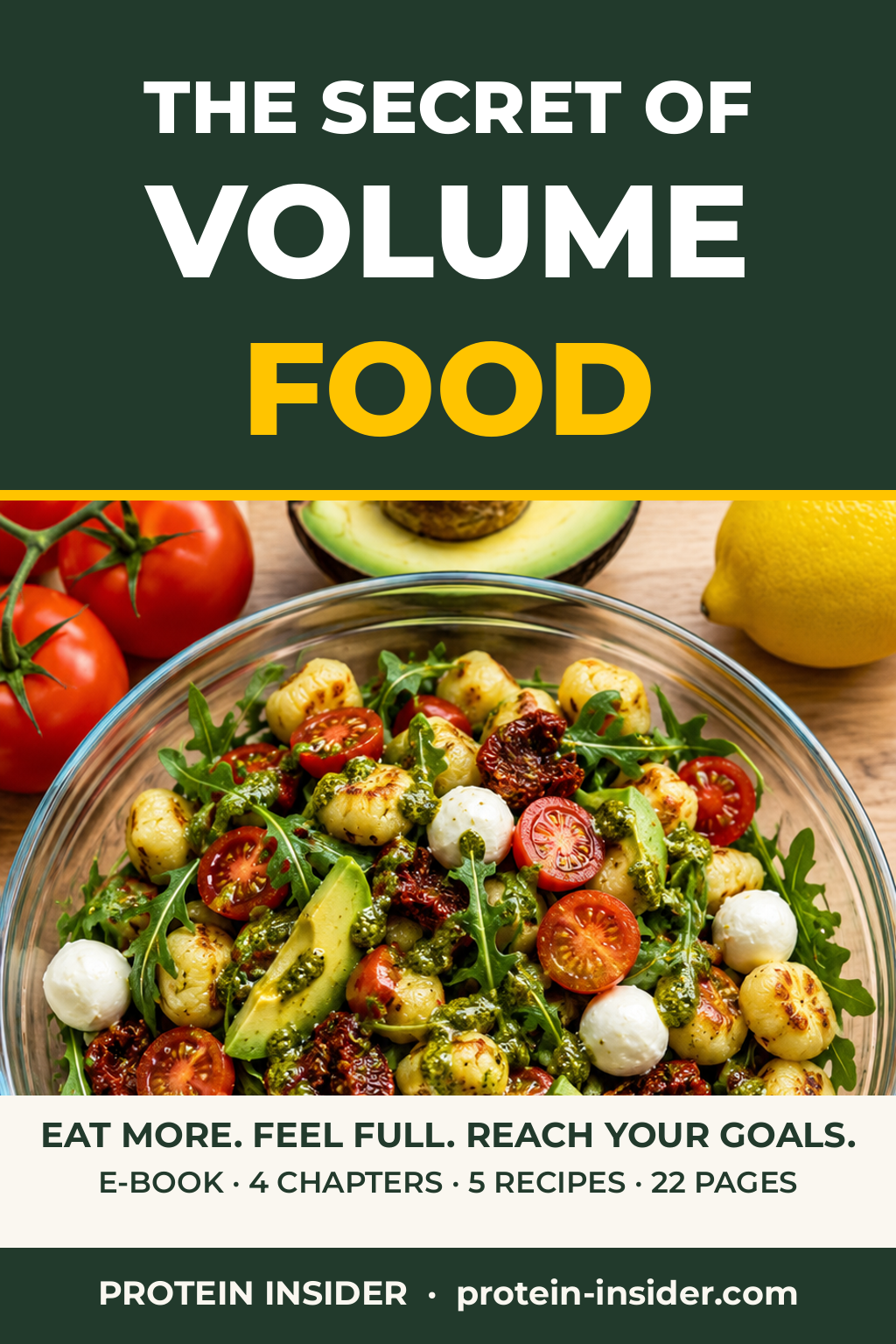
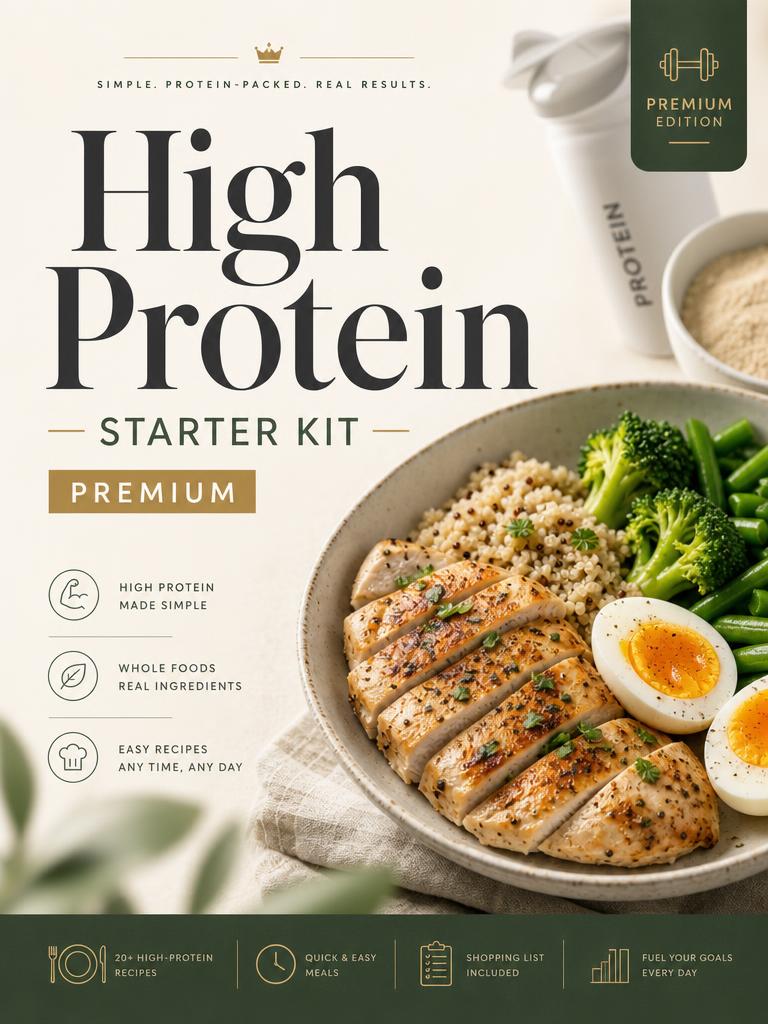
Matching e-books
Go deeper with our curated e-books on this topic.
Frequently asked questions
Per gram, yes — animal protein tends to be more complete and leucine-dense. But a well-formulated plant blend (pea + rice, or a varied plant diet) reaches the same result at a slightly higher total intake.
Keep exploring
Ready to improve your nutrition?
Discover our premium High Protein Guides with recipes, shopping lists and meal plans.
Explore Premium Guides