
Strength is
built, not found.
Progressive overload, enough protein and real recovery. Three levers decide whether you grow — everything else is noise.
The single biggest nutrition lever
The frequency sweet spot
Enough to grow, little enough to stay lean
Taken 1–3 reps from failure
Muscle grows in three moves.
Create a hard enough stimulus, supply the raw material, then let the body rebuild. Miss one and the other two stop working.
Stimulus
Hard sets, close to failure, with a load that forces adaptation. Tension is the signal.
Material
Protein and calories give your body the bricks and the budget to add tissue.
Recovery
Growth happens between sessions — in sleep, rest days and managed stress.
Pick the split that matches your week.
More days isn't better. The best plan is the one you can repeat for three months straight.
Full body
Every muscle, every session
- Squat pattern
- Push (bench / dip)
- Pull (row / pulldown)
- Hinge (RDL)
- Core + arms finisher
Upper / lower
More volume per muscle group
- Upper A — horizontal press & row
- Lower A — squat focus
- Upper B — vertical press & pull
- Lower B — hinge focus
Push / pull / legs
Maximum volume, highest recovery demand
- Push — chest, shoulders, triceps
- Pull — back, rear delts, biceps
- Legs — quads, hamstrings, calves
How much work each muscle actually needs.
Roughly 10–20 hard sets per muscle per week, spread across two sessions. Below that you maintain; far above it you just accumulate fatigue.
The last 3–5 reps
do almost all the work.
Sets stopped far from failure barely count. Take each working set to a point where two more reps would be genuinely ugly.
2–3 min on compounds
60–90 s on isolation.
Rushing rest lowers the load you can handle — and load is the stimulus you came for.
Beat last week. That's the whole program.
One extra rep, 2.5 kg more, one cleaner set. Small, logged increments are what turn training into growth.
+10 kg in two months. That's growth.
Add reps first
Stay at the same load until you hit the top of your rep range on every set.
Then add load
Move up by the smallest jump available — 2.5 kg on compounds, 1–2 kg on isolation.
Deload when stalled
Three sessions with no progress? Cut volume for a week and come back stronger.
Fuel the work you just did.
Training writes the request. Nutrition decides whether your body can afford to say yes.
Protein at every meal
30–45 g per plate: chicken, fish, eggs, quark, tofu, lentils or a shake.
Carbs around training
Rice, oats, potatoes and pasta refill glycogen and drive performance in the gym.
A controlled surplus
300–500 kcal above maintenance — enough to build, not enough to blur the result.
Sleep is the anabolic
7–9 hours. Most repair and hormonal recovery happens while you're offline.
Daily protein target
Across 3–4 meals
≈ 0.25–0.5 kg per month
What separates lifters who grow from lifters who don't.
Five ways beginners stall
- Eating too little protein
- Training every day and never allowing recovery
- Only chasing heavier weight instead of clean technique
- Overdoing the calorie surplus and gaining too much fat
- Training without a plan or progression
Log every session
You can't progressively overload what you don't track. A notes app is enough.
Leave 1–3 reps in reserve
Hard sets build muscle. Grinding to absolute failure every set just wrecks recovery.
Master five compounds
Squat, hinge, press, row, pull-up. Everything else is accessory work.
Eat like you train
A brutal session with no protein and no surplus is a workout, not a growth stimulus.
Give it 12 weeks
Muscle is measured in months. Consistency beats every program hack on the internet.
Before you leave...
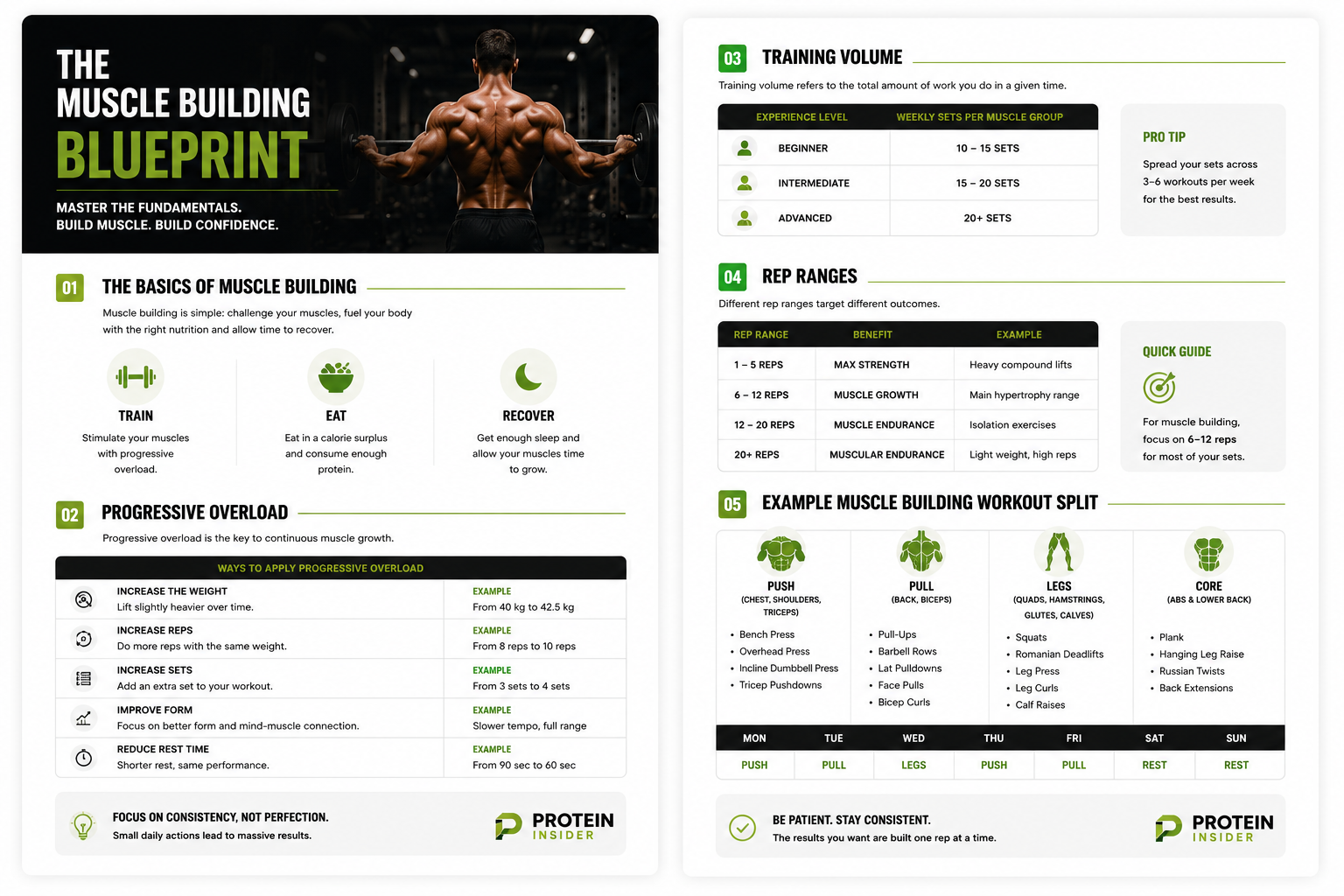
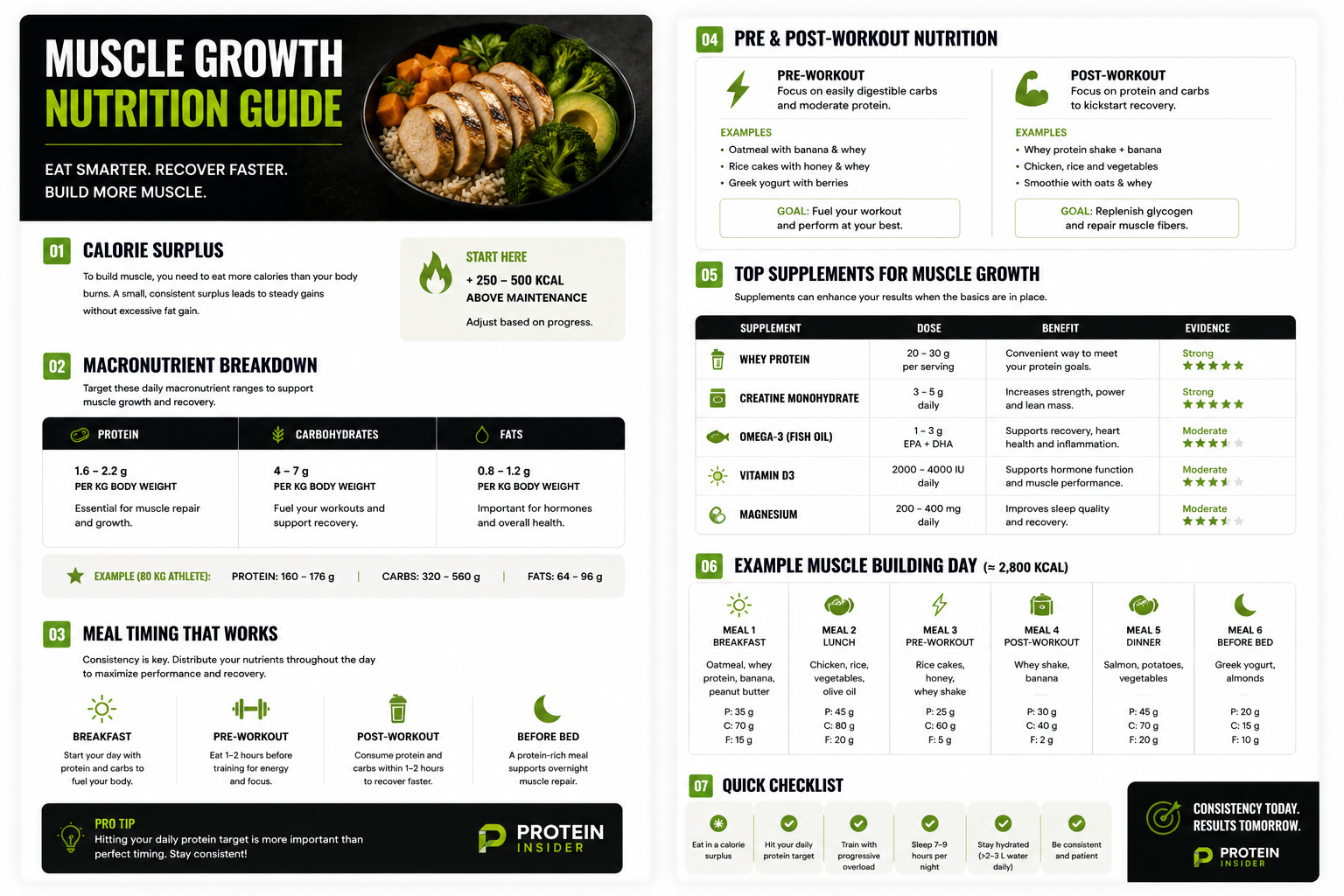
Building muscle takes more than lifting weights. These two free guides cover the training principles, nutrition strategies and recovery habits that make growth predictable.
- The Muscle Building Blueprint
- Muscle Growth Nutrition Guide
No sign-up required. Instant PDF download.
Recommended articles

Matching e-books
Go deeper with our curated e-books on this topic.


Frequently asked questions
1.6–2.2 g per kg of body weight per day, spread across 3–4 meals. Going higher does not add muscle faster in most people.
Keep exploring
Take the guesswork out of your next 12 weeks.
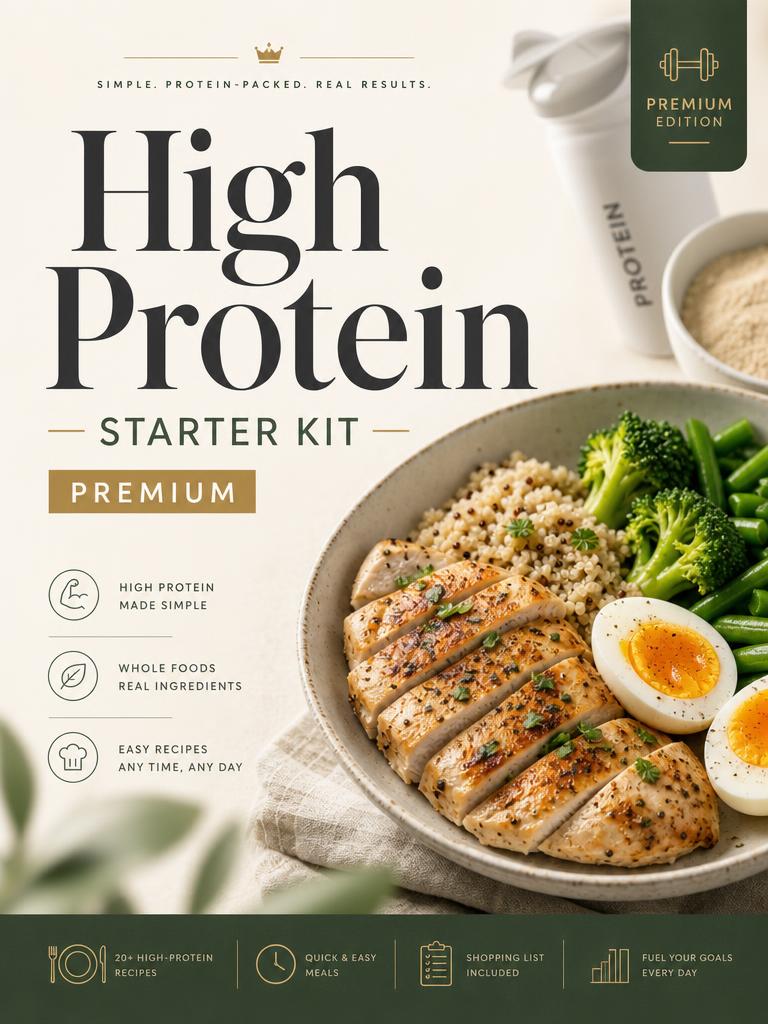
Detailed training structure, protein targets and recipes built for a build phase — in one place.
Explore premium guides