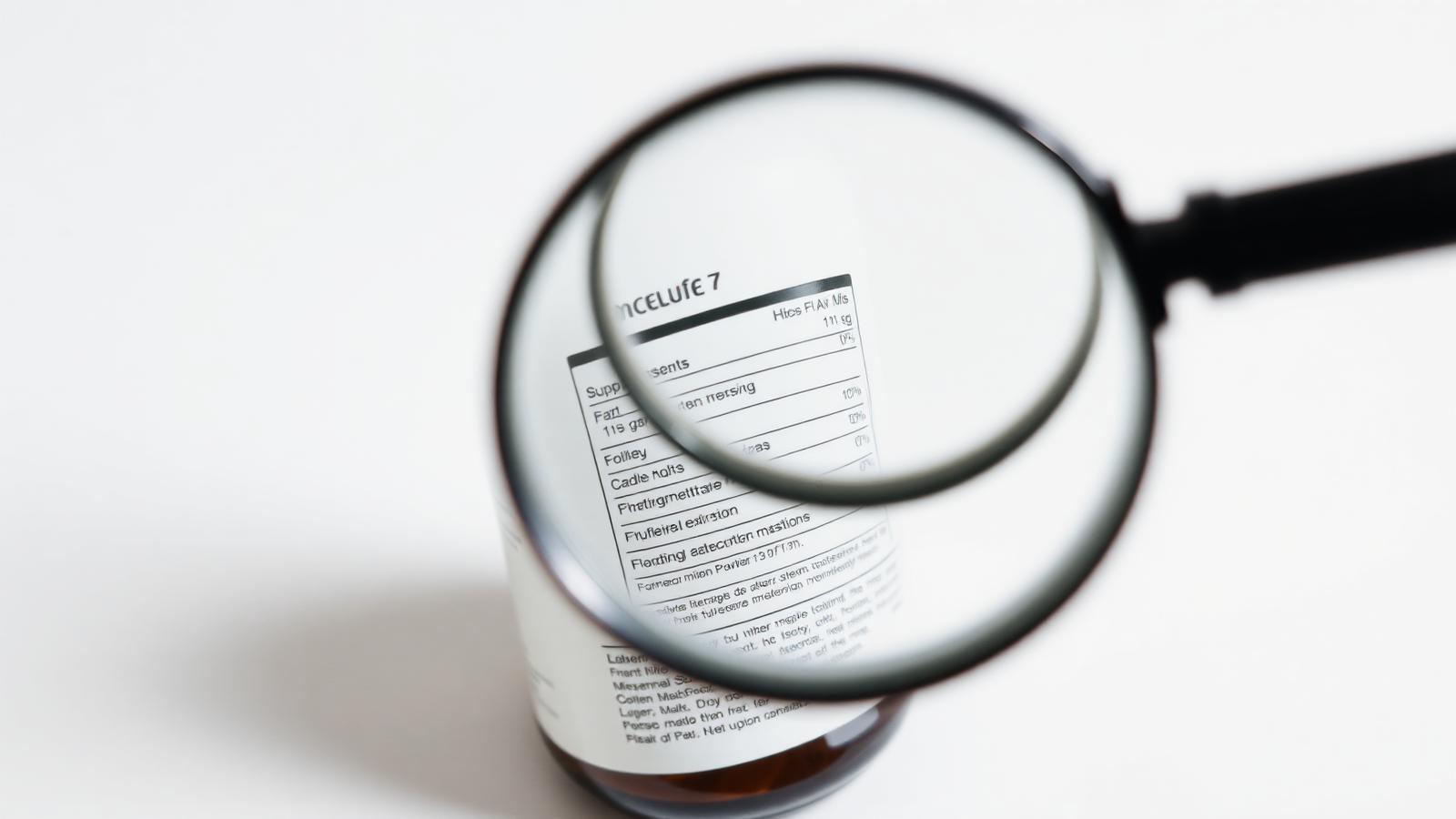
A label is a story the manufacturer wants to tell you. With a little practice you read past the story to the thing underneath — the actual formula you're about to swallow.
Step 1: form before marketing
Look for the chemical form of the active, not the brand name. Magnesium glycinate, not "Magnesium Complex". Vitamin D3 (cholecalciferol), not "activated vitamin D". The form decides bioavailability — the marketing only decides how the label looks.
Step 2: dose per serving vs. daily dose
"1,500 mg ashwagandha" sounds great — until you read that it's the daily dose split across six capsules. Always reduce to the serving size you'll actually take. Compare it to the dose used in studies.
Step 3: exclude proprietary blends
If the label says "Proprietary Blend: 2,400 mg" followed by five ingredients with no individual amounts, the formula is opaque. It's legal in the US — it's still a hard pass.
Step 4: place additives in context
Not every additive is a problem. Magnesium stearate, rice flour or cellulose are harmless in typical amounts. More concerning: artificial colours, sucralose at high doses, titanium dioxide (banned in the EU since 2022, still found in imports).
Step 5: third-party testing
Seals like Informed Sport, NSF Certified for Sport, or the Cologne List mean the product was externally tested for contamination and doping substances. For pre-workouts and fat burners this isn't optional — industry-wide contamination sits around 15%.