High-protein nutrition is often presented as a strict bodybuilding diet built around enormous portions of meat and endless shakes. In practice, it is simply an eating pattern that provides enough protein to support your goals while leaving room for carbohydrates, fats, fibre and micronutrient-rich foods.
Protein supplies amino acids, which the body uses to build and maintain muscle and make enzymes, hormones and other essential compounds. Resistance training increases the reason to pay attention to protein, but protein also matters for active people, older adults and anyone trying to preserve lean mass while losing weight.
The useful question is not whether protein is good. It is how much you need, where to get it and how to fit it into a balanced diet without making every meal difficult or expensive.
How Much Protein Do You Actually Need?
Protein needs are best viewed as a range rather than a single perfect number. Body size, training, total calorie intake, age and goals all affect an appropriate target. The basic recommendation for generally healthy, sedentary adults is designed to cover minimum needs. People who lift weights or train regularly often benefit from more.
For active adults, a practical daily range is about 1.2 to 2.0 grams of protein per kilogram of body weight. Lifters focused on gaining muscle can usually aim around 1.6 grams per kilogram as a sensible starting point. Some people may prefer a little more, especially when dieting, but increasingly high intakes do not automatically produce increasingly large gains.
For example, an 80-kilogram lifter using 1.6 grams per kilogram would target roughly 128 grams each day. That could be rounded to 130 grams because food labels, serving sizes and daily appetite are never perfectly precise. Consistency across weeks matters more than hitting an exact figure every day.
| Situation | Practical daily range | Main consideration |
|---|---|---|
| Generally active | 1.2–1.6 g/kg | Supports regular activity and recovery |
| Resistance training | 1.6–2.0 g/kg | Supports muscle repair and growth |
| Calorie deficit | Toward the higher end | May help preserve lean mass and manage hunger |
| New to tracking | Start near 1.6 g/kg | Adjust for appetite, results and practicality |
These are broad planning ranges, not medical prescriptions. Anyone with kidney disease, another relevant health condition or specific dietary restrictions should get individual guidance from a qualified healthcare professional.
Distribute Protein Across the Day
Your daily total is the main priority, but distribution also matters. Eating most of your protein at dinner while having very little at breakfast and lunch is common. A more even pattern gives your body several opportunities to use dietary amino acids for muscle repair and maintenance.
A straightforward approach is to divide your target across three to five eating occasions. Someone aiming for 130 grams might have 30 grams at breakfast, 35 grams at lunch, 20 grams in a snack and 45 grams at dinner. The numbers do not need to be identical, and there is no need to eat on a rigid schedule.
Many adults can build meals around roughly 25 to 40 grams of protein, with the exact amount depending on body size and total daily needs. Larger people and those with high targets may need bigger portions or an extra protein-rich snack.
Protein timing around training is less urgent than supplement advertising often implies. A balanced meal within a few hours before or after lifting is generally practical. If you train early without eating, breakfast becomes a convenient recovery meal. If you train after lunch, dinner may naturally cover your post-workout needs.
Choose Protein Sources That Fit Your Diet
No single protein food is essential. Animal foods tend to provide all essential amino acids in useful proportions and are often protein-dense. Plant foods can also support muscle and health, although larger portions or a mix of sources may sometimes be needed to reach the same protein target.
- Lean meat and poultry: chicken, turkey, lean beef and pork provide substantial protein without requiring large portions.
- Fish and seafood: salmon, tuna, prawns, sardines and white fish supply protein, with oily fish also contributing beneficial fats.
- Dairy foods: Greek yogurt, cottage cheese, milk and reduced-fat cheese are easy additions to meals and snacks.
- Eggs: whole eggs are nutrient-rich, while egg whites can increase protein with fewer calories.
- Soy foods: tofu, tempeh, edamame and fortified soy milk are versatile plant-based options.
- Pulses: lentils, chickpeas, beans and split peas provide protein alongside fibre and carbohydrates.
- Wheat and pea products: seitan and some minimally processed meat alternatives can be especially protein-dense.
- Protein powders: whey, casein, soy, pea and blended plant powders offer convenience but are not mandatory.
Variety is useful because protein foods differ in more than amino acids. Fish may provide omega-3 fats, dairy contributes calcium, pulses provide fibre, and meat can supply iron and vitamin B12. Rotating sources helps create a broader nutrient intake and keeps meals more enjoyable.
Plant-based eaters do not need to combine specific proteins at every meal. Eating a varied diet across the day is generally enough. Because some plant proteins are less digestible or lower in particular essential amino acids, plant-based lifters may find it helpful to aim toward the upper end of their protein range and regularly include soy, legumes, seitan, nuts, seeds and protein-rich grains.
Build Balanced High-Protein Meals
A high-protein meal should still look like a complete meal. Start with a clear protein source, then add produce, a carbohydrate source and an appropriate amount of fat. This structure supports training performance, recovery, digestion and overall dietary quality.
Carbohydrates are especially useful for people who train hard. Rice, potatoes, oats, pasta, bread, fruit and other carbohydrate-rich foods help fuel lifting and replenish stored carbohydrate after exercise. Cutting them aggressively simply to make room for protein can leave training flat and meals unnecessarily restrictive.
Dietary fat also matters. Olive oil, avocado, nuts, seeds, eggs and oily fish can contribute flavour, energy and essential fatty acids. Because fats are calorie-dense, portions may need attention during fat loss, but eliminating fat is not the answer.
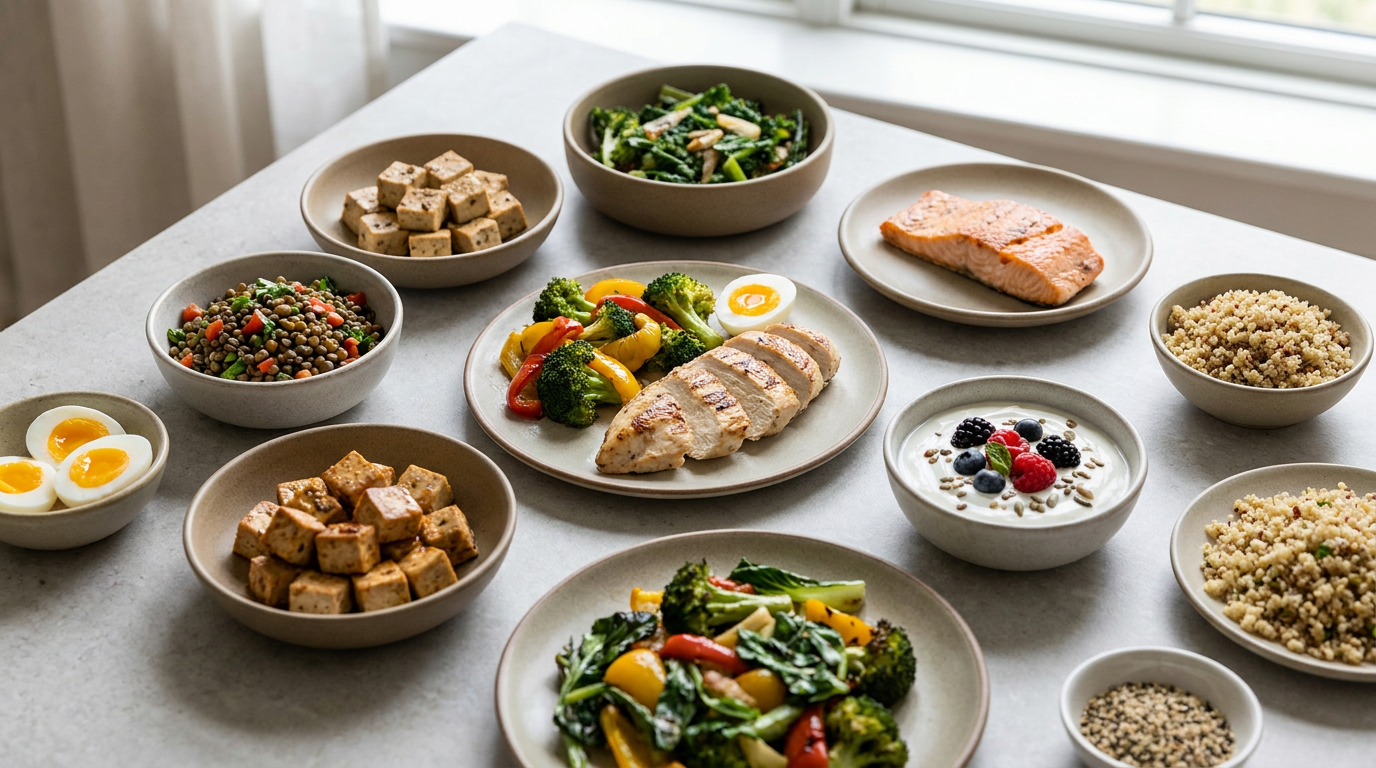
A simple plate might include chicken, roasted potatoes and mixed vegetables with olive oil. A vegetarian version could use tofu, rice, edamame and stir-fried vegetables. Breakfast might be Greek yogurt with oats, berries and seeds, or eggs on wholegrain toast with fruit. The exact foods are flexible; the structure is what makes the approach repeatable.
Use Supplements for Convenience, Not as a Foundation
Protein powder is food in a concentrated, convenient form. It can help when you have limited time, a small appetite or a daily target that is difficult to reach through regular meals. It is not inherently superior to chicken, yogurt, tofu or beans, and it does not create muscle without appropriate training and sufficient total nutrition.
Whey protein mixes easily and contains a strong essential amino acid profile. Casein digests more slowly and creates a thicker texture. Soy is a well-supported complete plant protein, while pea, rice and blended plant powders can suit people who avoid dairy and soy.
When buying a powder, check the protein per serving, ingredient list, serving size and added sugar rather than relying on claims printed across the front. People who compete in tested sport should look for products certified by a reputable third-party testing program to reduce the risk of contamination.
Most people do not need multiple shakes each day. If supplements are displacing fruit, vegetables, whole grains and varied protein foods, convenience has started to reduce diet quality. One shake used to fill a genuine gap is different from building most of the day around powders and bars.
Avoid Common High-Protein Diet Mistakes
The most common mistake is treating protein as the only nutrient that matters. A diet can be high in protein while still being low in fibre, short on micronutrients or poorly matched to your energy needs. More protein does not cancel out an otherwise unbalanced eating pattern.
- Increasing protein overnight: a sudden jump, especially from bars, powders and large amounts of dairy, may cause digestive discomfort. Increase portions gradually.
- Ignoring fibre: include vegetables, fruit, pulses and whole grains, and drink enough fluid for your needs.
- Choosing only very lean foods: some dietary fat supports a balanced diet and makes meals satisfying.
- Forgetting calories: protein supports fullness, but high-protein foods can still contribute more energy than your goal allows.
- Relying on processed products: bars and ready-to-drink shakes are useful occasionally, but whole and minimally processed foods should do most of the work.
- Chasing perfect timing: missing an immediate post-workout shake will not erase a productive session.
- Changing too many variables: use a stable target for several weeks before deciding whether it works.
Digestive tolerance is individual. Lactose-free dairy, smaller servings of pulses, firmer tofu or different protein powders may work better for some people. Preparation matters too: rinsing canned beans and gradually increasing fibre can make a high-protein eating pattern easier to tolerate.
Make High-Protein Nutrition Affordable and Sustainable
A useful nutrition plan must survive busy weeks and ordinary grocery budgets. Premium steaks, specialty snacks and branded meal replacements are not required. Eggs, canned fish, milk, yogurt, dried or canned pulses, frozen edamame, tofu and larger packs of poultry can provide protein at a lower cost.
Compare foods by protein per typical serving and by price per serving, not by package price alone. Frozen and canned foods are often as practical as fresh options and can reduce waste. Store-brand dairy, canned beans and basic protein powders may offer similar nutritional value to more expensive versions.
Preparation does not need to mean eating identical containers all week. Cook two flexible proteins, one grain or potato dish and a tray of vegetables. Use them in bowls, wraps, salads and stir-fries with different sauces. Keeping Greek yogurt, eggs, canned tuna, tofu or cooked lentils available also makes quick meals easier.
Track intake briefly if you do not know how much protein you currently eat. A few typical days can reveal whether breakfast is low in protein or portion estimates are unrealistic. After learning which meals reliably provide 25, 30 or 40 grams, many people can stop detailed tracking and use familiar portions.
A sustainable high-protein diet is not the one with the highest possible number. It is the one that provides enough protein, supports training, includes varied foods and fits your appetite, culture, schedule and budget. Set a reasonable target, spread it across the day and keep the rest of your plate balanced.